



As a company grows, its phone lines start carrying more weight than they were ever built for. Business call management quietly turns into one of the hardest parts of running daily operations, especially once inquiries about new services, ongoing client work, and everyday customer support all start competing for the same handful of phones.

Add remote employees or several departments into the mix, and things get messy fast. Calls land with the wrong person, customers sit on hold because an agent is already on another line, and the whole process starts to feel disorganized.
Missed calls become almost inevitable once a to-do list gets long enough that a callback slips someone’s mind. A missed call can mean a missed opportunity, particularly when prospects are comparing several providers.
Picture an employee juggling a hundred small tasks in under an hour; a callback is exactly the kind of thing that falls through the cracks.
Now picture routing incoming calls at a growing company. As the customer base expands, so does the confusion, especially when different callers need different things: product questions, billing help, or simply a real person on the line. This is the exact problem a business calling system is built to solve, by making it simple to connect every caller with the right agent.
A calling system that works fine for a three-person team can fall apart once call volume ramps up. It pays to fix call routing issues early, well before growth makes them harder to untangle.
Common Call Management Mistakes Companies Make
Relying on personal phones for work blurs the line between professional and personal life almost immediately. It also makes it hard for a colleague to step in and take over a client conversation without any context on what’s already been discussed.
Another frequent misstep is routing every incoming call to a single employee.
That person ends up fielding questions meant for sales, support, billing, and everything in between. Beyond putting extra pressure on that employee, it also raises the odds that a call never reaches someone who can solve the problem.
Missed and after-hours calls shouldn’t be ignored either. They tend to land while staff are in meetings, away from their desks, or off the clock. Without a system for handling them, employees lose track of who they still owe a callback, piling more onto an already full schedule.
Tracking calls across scattered systems only adds to the problem. Details end up spread across call logs, sticky notes, chat messages, and memory. Hunting for that information before responding slows everyone down and forces the customer to repeat themselves.
Think of a customer who explains an issue in detail to one employee, only for a different employee to follow up with no idea what was already said. These small gaps start as harmless workarounds, but as call volume climbs, they turn into real problems for the whole organization’s communication process.
How Calilio Helps Growing Teams Manage Business Calls
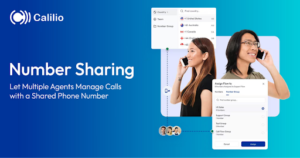
A dedicated business phone number gives customers one line that’s reserved strictly for business, separate from anyone’s personal number. It also makes it easy to bring other employees into the loop when calls need to be shared or handled by more than one person.
Beyond a separate number, businesses do best when they assign specific employees to specific types of inquiries.
Doing this cuts down on the number of people fielding the same kinds of calls. Publishing clear business hours also helps, since customers know exactly when they can expect a response. For calls that come in outside those hours, a simple process, whether that’s voicemail or a basic message-taking system, keeps things from slipping through the cracks.
Keeping an organized record of every call matters just as much.
That means logging messages and important notes, along with the time and details of each call, in one dedicated place instead of leaving it to memory.
With a structured system like Calilio, communication becomes clearer than it could be over personal phones. Its business number and call routing tools help teams manage rising call volume. Organizing business calls isn’t complicated, but having a smooth process at every stage, from the first ring to the follow-up, makes everyone’s job easier.
Ways to Handle Busy Business Calls with Features

Ways to handle busy business calls using call management features
A. Incoming call
How a business call service gets in motion, it all starts with an inbound call.
A straightforward plan helps move the call to the next stage without leaving the customer on hold or transferring it to the wrong person.
B. IVR and Call Routing
An IVR, or automated call flow, routes incoming calls to the right department or employee without any manual sorting. It gives customers a clear path to the person who can help.
A sales inquiry, for example, gets sent straight to the sales team instead of landing with support first and having to be transferred, which helps reduce unnecessary transfers.
C. Queue or available agent
The caller gets connected with an available agent or is placed in a queue if all agents are currently talking to other customers. This keeps the customer engaged while waiting.
D. Call Forwarding and Business Hours
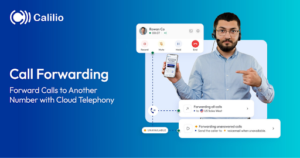
When the assigned employee can’t take a call, call forwarding sends it to another available team member. This can reduce the likelihood of a call going unanswered.
Clear business hours set expectations up front. Customers know when they’ll get an answer and when they’ll need to plan around staff being unavailable.
E. Call Logs, Notes, and Recordings

Keeping a full call history lets employees look back on past conversations and plan follow-ups with real context, instead of relying on memory.
Before calling a customer back, an employee can pull up prior notes and recordings to understand exactly what’s already been discussed.
F. Unified Callbox
Keeping track of calls, texts, and voicemails across different tools is a common headache. The Unified Callbox brings these channels into one place.
Inside the Unified Callbox, a business can see a client’s full history across calls, SMS, and voice messages without switching between platforms, making it far easier for an employee to reach out with the right information.
G. AI Call Summaries and Transcriptions
Long calls often carry details that are easy to forget or hard to jot down in real time. AI call summaries make it easier to review what mattered and follow through afterward.
Rather than trying to recall an entire conversation from memory, an employee can scan the summary and plan the next step immediately.
How Calilio Helps Growing Teams Manage Business Calls
A. Setting Up a Business Number
For a business just getting off the ground, having a number separate from a personal phone matters early on. Calilio offers a straightforward sign-up so companies can try the service before committing to a larger business calling system.
B. Take Care of Those Incoming Calls (More Than a Phone Number)
More incoming calls call for more than a single line. Calilio pairs an automated IVR with call forwarding, call routing, configurable business hours, and detailed call logs to cover the full range of business communication needs.
C. Staying Organized (Unified in One Place)
Instead of juggling SMS, voicemail, and calls across separate tools, the Unified Callbox brings everything into one location and also supports notetaking, AI-driven call summaries, recordings and transcriptions, so employees always have the full picture of a customer relationship.
Benefits of an Organized Business Call Management System
Benefits of an organized business call management system for efficient communication
A. Quicker Response
A properly built system smooths out communication between customers and staff, connecting each caller with the right person without unnecessary transfers along the way.
With business calling solution, a customer has a clearer path to the right department instead of having to explain the same issue to several employees.
B. Fewer Missed Calls
Answering incoming calls matters in customer service. A clear call-handling framework lets employees manage volume more efficiently, which can support steadier response times across the board.
A company running on a full call management system doesn’t have to leave incoming calls to each individual employee’s memory.
C. Filter Your Work-Related and After-Hours Calls
Setting specific business hours and sticking to them improves the experience for every caller and gives the business a clear policy for handling anything that comes in outside that window.
D. Improved Follow-up
Follow-up calls go smoother when an employee already knows what a customer discussed the last time they spoke.
Pulling details from earlier conversations in call history helps an employee understand exactly what the customer needs before they even dial. For example, when checking in on a pending request, that context is already sitting in the system, ready to use.
E. Observe and Upgrade Your System
Call management isn’t a set-it-and-forget-it task. It’s worth revisiting as a business evolves. Slower responses or too much call forwarding are signs that it’s time to review the setup.
Business number tools, paired with its routing and business hours features, give teams a clear way to track communication progress and keep the whole system running smoothly.
Practical Business Call Management Workflow
A simple call-management workflow can help teams handle a call from the first ring to the final follow-up.
Incoming call → IVR/routing → queue or available agent → voicemail/forwarding if unanswered → call log → notes/AI summary → assigned follow-up.
This process gives each call a clear next step. The caller is directed to the right place, unanswered calls have a backup option, and call details stay available for follow-up.
Conclusion
Growing a business already comes with enough challenges, and communication shouldn’t be one of the ones holding it back. A clear call system for business makes day-to-day operations run smoother: a dedicated number, smooth call routing, and an organized call log all give a team real control over its calls and messages.
Calilio brings together “business calls”, texts, and follow-ups under one roof and serves as a telephony partner to more than 1,000 businesses worldwide. With the right system in place, less time gets spent untangling internal communication, and more time goes toward the customers who keep the business running.
Frequently Asked Question
What can businesses do to avoid missing important calls
Businesses need a clear process for logging inquiries, routing them, and following up, so no customer question goes unanswered.
Is a separate business phone number essential for small businesses?
Yes. A dedicated business phone number keeps business interactions separate from personal ones and gives customers a consistent point of contact.
How can Calilio’s call routing benefit a business?
Calilio’s call routing makes sure inquiries reach the right employee or team based on what the customer needs, cutting down on unnecessary transfers and wait times.
What should businesses do with calls that come in after working hours?
Businesses should set clear business hours and have a plan, whether that’s voicemail or call forwarding, for handling anything that comes in outside them.
Why is it crucial for businesses to maintain a call history?
A call history gives employees the context they need to follow up effectively and serve customers well, without having to ask them to repeat themselves.
How can Calilio help businesses in organizing communication?
Calilio brings together call routing, call forwarding, call logs, the Unified Callbox, and AI call summaries to keep every conversation organized in one place.
What key aspects should businesses focus on when selecting a business calling service?
Look at functionality, ease of setup, call management features, how well it organizes communication, room to scale, and overall value for the price.